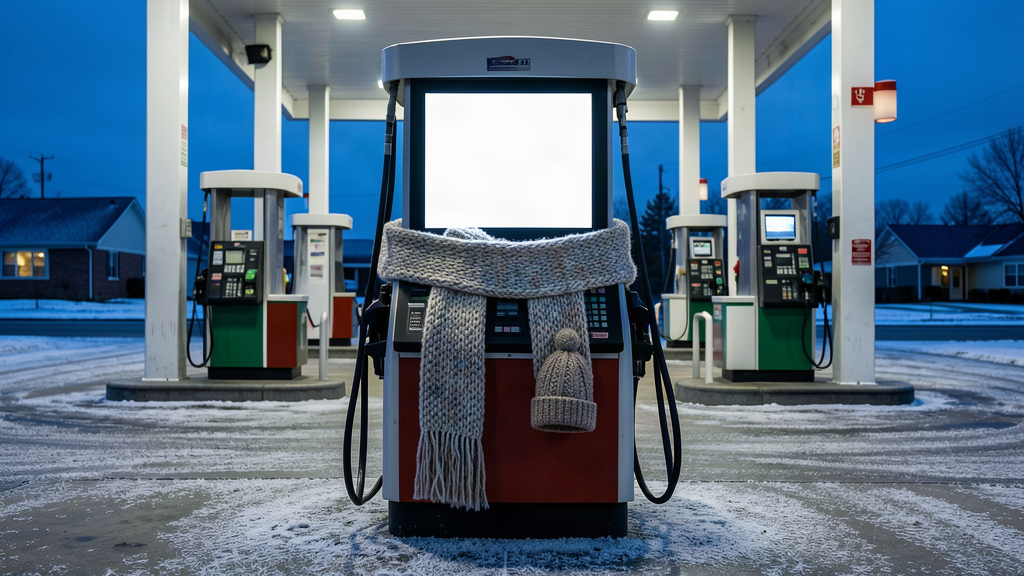
TOLEDO, Ohio — The gasoline in your tank changed clothes this month, and the country is calling it the closest thing to a tax cut since the last tax cut.
By mid-September the national average was $4.33 a gallon while crude oil circled $100 a barrel. By late October the refineries had finished switching the country over to the winter formula — a thinner blend that is cheaper to produce in cold weather, because gasoline, like everyone else, keeps a winter wardrobe. And by last Wednesday AAA reported the national average at $4.27, down six cents on the week, the whole drop attributed to the sweater.
Six cents. It is the most the country has agreed on in a year.
“That is the transition working exactly as designed,” said Doug Prewitt, a spokesman for AAA, whose weekly pump survey has become this year’s most-watched scoreboard. “The crude is the problem. The blend is just the blend.”
By Friday, Americans were spending their relief in the ways that tell you what a country believes. In Maumee, Marlene Yoder tracks the pump the way her mother tracked church. “I noticed it,” Yoder said. “Last month I was choosing one kind of dinner. This month I’m choosing two. We’re living dangerously, and it’s the blend that let us do it.”
The University of Michigan’s consumer survey, released Friday, found frustration at the pump now spanning every party — liberals, conservatives, and independents discovering the rare national solidarity that exists only in a parking lot. Economists reached for the same cautious phrase.
“Winter blend is a floor, not a ceiling,” said Marlon Tuck, an analyst who tracks pump sentiment for a bank nobody has heard of and nobody minds. “It holds the line. The ceiling is wherever oil wakes up tomorrow.”
The merchandising adapted first. A station in Bowling Green now sells parkas at the pump — “FOR THE BLEND,” reads the handwritten sign — and the owner, who asked that the sign’s grammar not be corrected, reported selling forty of them in a week. “People want to feel like something changed,” he said. “Forty people did not feel anything change. Forty people bought a parka.”
The requirement reverses each spring, when gasoline returns to its summer clothes at a higher cost of production, and the national conversation resumes its annual form. Both seasons are now, in their own way, on the record: six cents, times a fifteen-gallon tank, is ninety cents. That is not a fortune. In 2026, it is a headline.