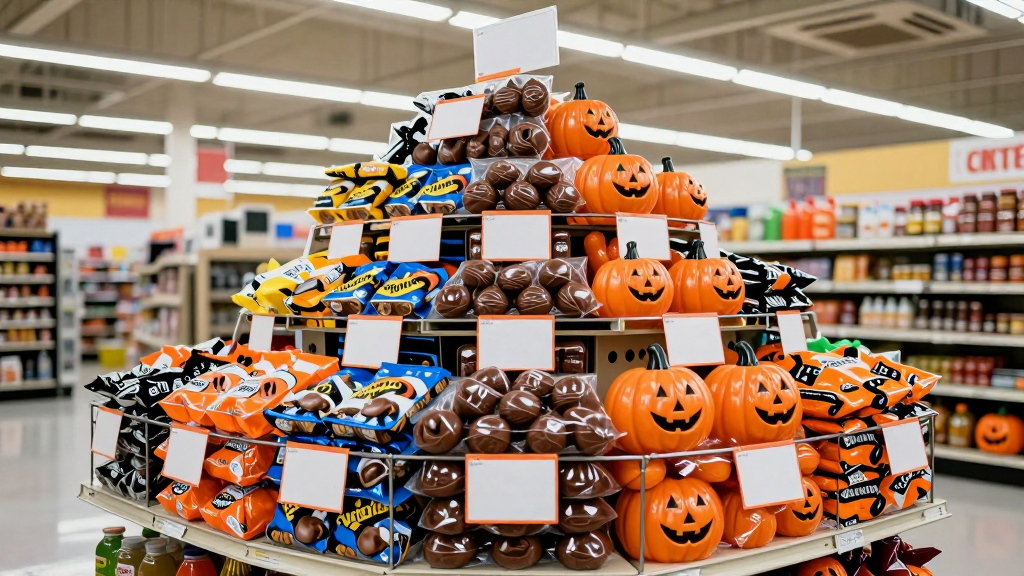
The wholesale price of cocoa has fallen roughly 70% this year, a collapse of historic proportions, and the American candy aisle has responded the way it always responds to good news: by pretending not to hear it.
Chocolate led the price increases for this Halloween season, according to CBS News, with the average chocolate product costing about 8% more than last year, a figure calculated by the Wells Fargo Agri-Food Institute. A 100-piece bag of assorted candy now averages $16.96. A candy-shop operator quoted by local12 noted that chocolate is running up 11 to 12% while the commodity that makes it has cratered, and observed the related phenomenon with the exhaustion of a man who restocks shelves for a living: the packages look as big as ever, and contain measurably less.
Economists have a name for this — several, actually — and the candy industry has a policy for it: use all of them at a press conference and change none of the shelf prices.
The mechanics are not complicated. That is what makes them beautiful. The cocoa bean is a global commodity; its price fell because supply improved. The candy bar is a local institution; its price fell for no detectable reason in 1934 and has considered the matter settled ever since. Analysts call this asymmetric pass-through. Parents call it Tuesday.
THE CANDY LEDGER, AT A GLANCE
- Wholesale cocoa: down about 70% since its peak
- Chocolate at retail: up roughly 8% over last Halloween
- 100-piece assortment bag: $16.96 average, up 3.5%
- Package volume: quietly on a business trip
- Consumer tolerance: still under review every October
The demand side is where the season gets interesting. Halloween candy sales are off to a slow start nationwide, with retailers blaming the affordability squeeze and consumers blaming the checkout scanner, and no one in the chain mentioning the word cocoa once. The holiday itself is considered recession-proof not because families stop buying candy, but because the purchase is made at 9:40 p.m. on a Saturday by a parent who has done the math and decided the math can wait until November.
Grocers point out, not inaccurately, that their margins on candy are thin, that freight costs more, that tariffs add paperwork, and that a bag of chocolate costs roughly what it costs. Candy makers point out that everything else on the shelf has gone up, and that they have been waiting politely for the candy to follow the cocoa down like everyone else keeps promising it will.
A manager at a drugstore candy display in Columbus, stacking the last of the seasonal inventory into a pyramid that has outlived three assistants, offered the clearest read on the market from someone who watches it directly.
“Prices go up and they stay up,” he said, straightening a row of pumpkins. “Kids don’t compare. They judge the bag.”
The cocoa futures market closed the week calm, content, unaware of the compliment being paid to it.