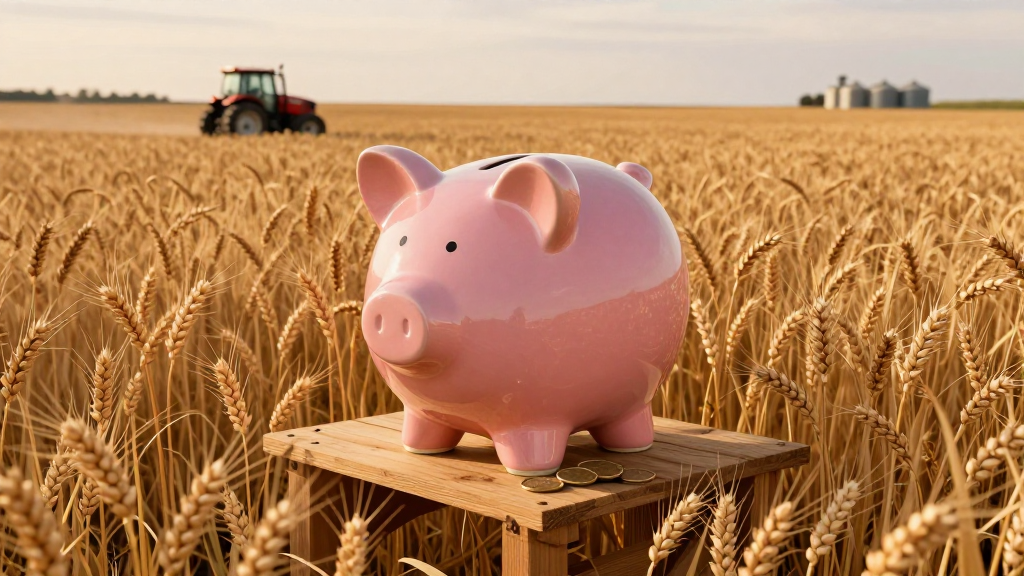
SIOUX FALLS, S.D. — In the closing act of what agricultural economists are already calling the finest shopping season in American history, the federal government has promised farmers more than $15 billion in payments, loans, and support during the final weeks before the midterm elections — a program designed to help producers pay for the diesel and fertilizer made expensive by the government’s own tariff policies and the war in Iran.
It is, in other words, the refund model: pay full sticker price all year, and right before the vote, a friendly check shows up in the mailbox to make the whole thing feel like a gift — an arrangement shoppers have paid less for at airport parking kiosks.
Earl Whitcomb, who farms 1,900 acres outside Britton and has kept his family’s combine running through four presidents and one very expensive year of nitrogen, was walked through the mechanics of the program by a reporter on Friday. What follows, in his words, is a master class in how a modern refund works.
Reporter: What did fuel cost you this year?
Whitcomb: Started the year at three-ten a gallon. Was paying close to five-twenty by planting. Fertilizer doubled on me in the fall. They tell us it’s the tariffs and it’s the war, and I believe them, I do. I’m not a political man. I read the same paper the whole town reads and the whole town stopped reading it in June.
Reporter: And then the government’s program arrived.
Whitcomb: Letter came in September about the aid. Meeting in October with fellas from the ag department in nice jackets. They explained they’d be helping with the fuel and the fertilizer costs. The costs — and I want to be fair here — the costs that were caused by everything else they do. That’s the part people keep getting wrong. Nobody’s giving me my money. They’re giving me my money back. After the year I had, at the counter, with the card already run — but they’re giving it back.
Reporter: How does that feel?
Whitcomb: It feels like Christmas timed by a campaign calendar. That’s not a criticism. My mother timed Christmas by a campaign calendar too. The tractor’s paid off now. Half of it, the same way anything gets paid off: the bank, then the tariff raised what the bank charges for the money, then the check came, and here we are. I got a newer planter out of this deal. The planter doesn’t know who caused what. The planter plants.
The tariff made him pay. The check made him whole. In between, the John Deere dealership in Britton added heated seats to every model and a coffee bar.
The administration’s announcement arrived in a run of weeks dense with farm gestures: grain-handling support, livestock relief, the promise of more to come, all of it timed so the checks and the ballots would reach the same mailboxes in the same season. Election officials will tell you that early-voting locations in this county were built for exactly this traffic.
A regional official with the Agriculture Department, speaking on condition that this not be characterized as an announcement, said officials were simply following the calendar, and that the calendar, while public and printed on top of campaign schedules, remains a coincidence. He then drove off in a government truck with new mud flaps.
Whitcomb said he intends to vote on Tuesday the way he always does, which is early, and which this year means standing in a building alongside a poster about the very aid that arrived because of him.
“Democracy’s like a co-op,” he said. “You buy the feed all year at whatever price they set, and in the fall they call you in to vote on the price of the feed. You ever see a co-op vote go against the feed?”
He was asked whether the fifteen billion changes anything.
“It bought a planter,” he said. “Ask the planter.”