At 3:12 a.m. Wednesday, with returns still arriving by county carrier, stock futures were pointed down, which is what futures do when they are scared.
By 9:31, the scare had reversed itself. Once the returns had done what the returns did — Democrats taking both the House and the Senate — Dow futures surged roughly 800 points on the theory that the results had “removed political risk hanging over Wall Street”. The S&P 500 futures erased their steep early losses and turned positive. Gold and Treasury bonds rallied. The dollar fell. Semiconductors, lifted by strong results from two chip companies that earn money regardless of who counts votes, did their usual thing.
Analysts, asked to explain the celebration, mostly explained the arithmetic: a Democratic Congress and a Republican White House means, in the phrase that crossed every trading desk before the opening bell, gridlock. Nothing passes. Nothing is signed. The machinery of government, which spent the summer being unpredictable, settles into its natural position, which is two parties leaning on each other in a doorway, neither moving, both out of the market’s light.
Investors heard all week that a Democratic Congress would mean tougher regulation, including for the artificial-intelligence companies that currently power half the market’s optimism. They bought anyway. This is what confidence actually looks like: paying attention to the warning, and trusting the calendar. Any law this Congress passes must survive a Senate filibuster, a House conference, and a signature from a President whose pen has its own weather system. The market looked at that pipeline on Tuesday night and priced in the one certainty that has never once missed: distance.
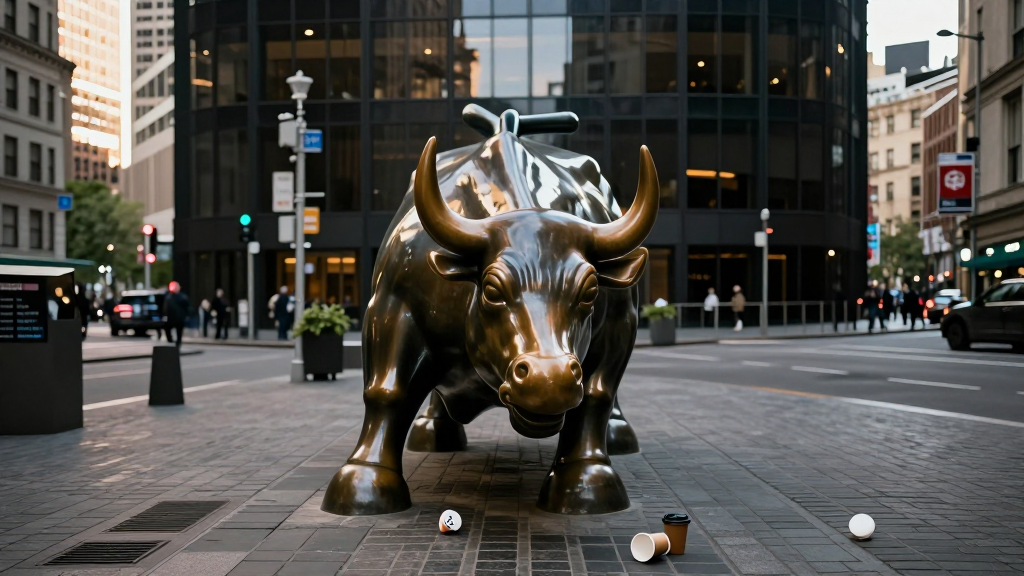
The bull on Wall Street, for the record, has been standing in the same spot since 1989 and charging admission to no one. It is the city’s most honest employee. It cannot close a deal, sign a bill, or stop a decline, and it has never pretended otherwise, which is perhaps why it remains the only monument in New York no one has proposed renaming.
By noon, the reaction had arrived at its final, full form. The country had produced the most decisive midterm verdict in a generation — a governor ousted in Texas, a Senate map redrawn, a new Speaker on the way — and the market’s total answer, computed by thousands of professionals at a cost of several billion dollars in combined salaries, was this: a one percent move up, on the grounds that nothing would be done about anything, which is the largest tradeable product in Washington and, as of Wednesday morning, the only one in stock.