WASHINGTON — The incoming Democratic majority in the House of Representatives has, before being seated, already released what is expected to be the defining policy statement of the next two years. It is two words long, it was issued by Rep. Robert Garcia, the California Democrat expected to chair the House Oversight Committee, and it has been printed on mugs in Alexandria.
It is difficult, in this town, to improve on four letters and a preposition. But the new Congress intends to try, and the machinery is now visibly warming up.
Phase one: subpoenas
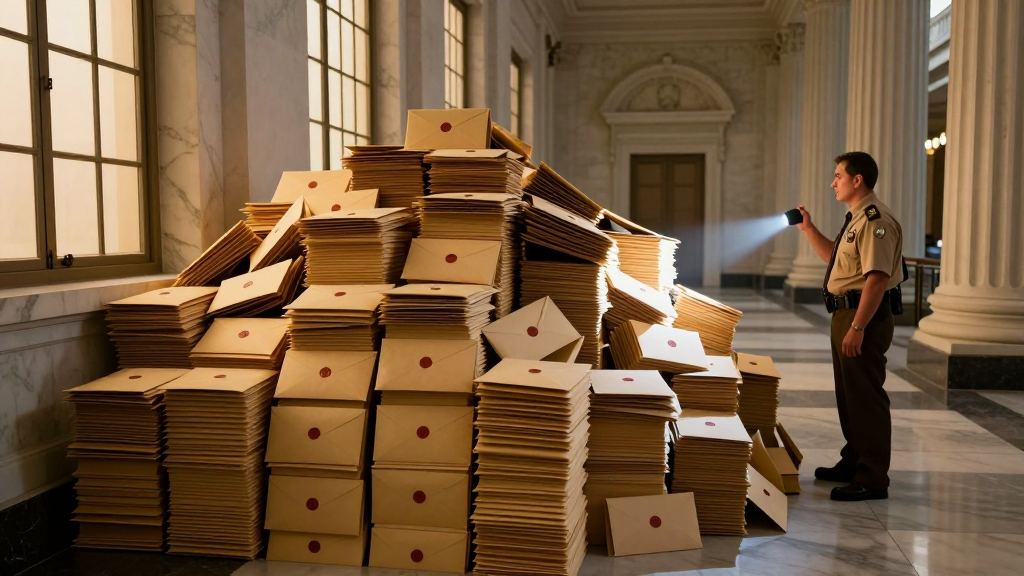
Democrats are preparing simultaneous investigations across multiple committees into the administration, its family, its businesses and its allies, with subpoena power reserved for anyone who has forgotten where their files live. In the Senate, the Judiciary Committee and the Permanent Subcommittee on Investigations are preparing what senators describe, privately and with great joy, as the paperwork phase.
Some Republicans are alarmed, which is their right. The House GOP has launched a defense plan to shield the president from these looming probes. The plan is widely described as comprehensive. It is also, as any observer of the last decade will tell you, fully fluent in the language of the thing it defends against. The party that spent years perfecting the investigative hearing — the seating charts, the video montages, the one-year-old documents read slowly into the record — now needs a subpoena response desk. You have to admire the institutional continuity.
Phase two: more subpoenas
Businesses, to their credit, moved first. Corporate compliance offices are budgeting for document preservation the way homeowners budget for snow: not with excitement, but with a schedule. One compliance officer in Wilmington, Del., who asked that his company not be named because it has forty open subpoenas and did not want to appear greedy, reported that his staff had begun the new cycle “with binders we had already bought twice.”
The National Association of Congressional Historians, which is not a lobby but has the letterhead of one, notes that Congress has conducted more than 2,400 investigations since 1975, and that every single one of them was, at some point, somebody’s idea of a good time.
Phase three: everyone hires the same lawyers
The genuine scandal, if you want one, is not that the investigations are coming. It is that both sides know exactly how they work, both sides have run them, and both sides expect the other to complain about them — a complete American circle, unbroken since the first committee decided that a witness had not been sufficiently sworn.
Some say the subpoenas will reform the administration. Others say the subpoenas will be obstructed, appealed and photographed. The truth, as always, lies somewhere in a third position: the subpoenas will be mailed, and the mail will be the story.
By Thursday evening, staff had drafted the first oversight letter, retitled it for the cameras, drafted it again, and sent it out for comment.