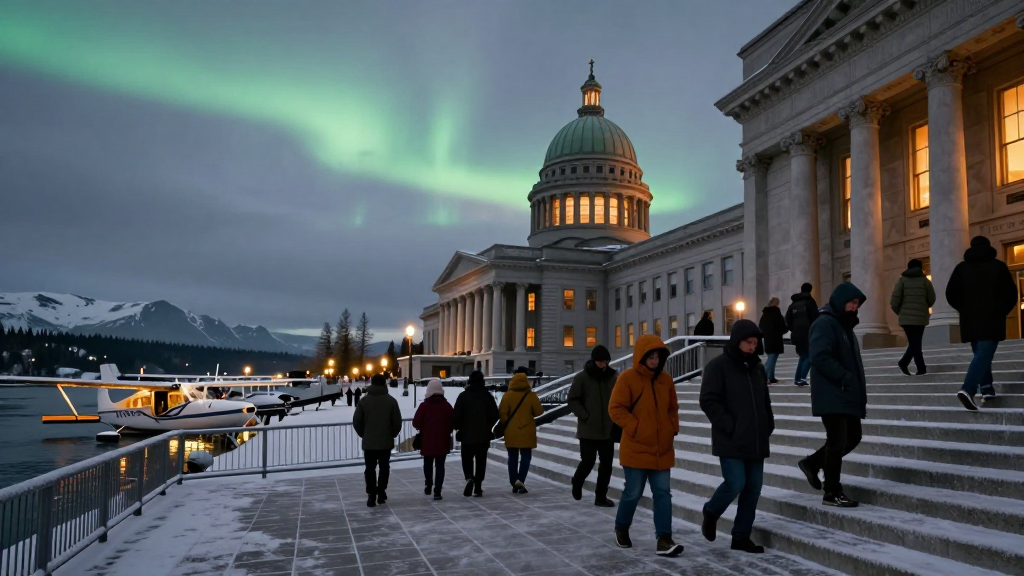
JUNEAU, Alaska — By 12:40 a.m. Thursday, the night had already done what the campaign said it would do, which was nothing dramatic. The polls closed, the ballots moved by bush plane and by ferry and by four-wheel drive across a state that has more area than the next two largest states combined, and at some point between a fish fry in Anchorage and a pot of coffee in Juneau, Alaska quietly finished a job it had been putting off since 1998: it elected a Democrat governor, a 37-year-old named Jonathan Kreiss-Tomkins, and then most of the state went to bed.
By breakfast, the numbers had settled into their permanent shape. Kreiss-Tomkins took 50.8 percent of first-choice votes. The Republican who carried the President’s endorsement, Bernadette Wilson, took 28.1. The other two Republicans on the ballot — Dave Bronson and Treg Taylor — split what remained, because under Alaska’s top-four system the general election carries the four most-voted candidates regardless of party, and this year the four most-voted candidates included three Republicans who all believed themselves to be the one. Kreiss-Tomkins crossed fifty percent without needing a single second choice from anyone. He beat three opponents by not being two of them.
By midmorning, the concessions had been issued and the party chairs had performed their customary solemnity. Wilson thanked her supporters and blamed no one, which observers noted was new. Kreiss-Tomkins gave a speech built almost entirely out of sentences about buildings — where state business happens, when it happens, who answers the phone when it does.
That was the whole secret, and Alaskans said so without embarrassment. He beat Dunleavy’s two-term government the way a tenant beats a landlord who never returned calls: not with a movement, with a calendar. His campaign platform was procedure itself — budgets passed on time, committees attended, a legislature described by its future governor as a place that should operate like a shop where someone is actually present. The nation reached for the word “upset.” The state reached for a stronger word, which was “finally.”
The Ballot, at a Glance
- Four finalists, three of them Republican, all four on the same November ballot
- Kreiss-Tomkins: 50.8% first-choice. Wilson: 28.1%. The rest was arithmetic.
- Ranked-choice runoff: not required, because one man simply won
- Last Democratic governor: Tony Knowles, gone in 2002
- New governor's age: 37 — the youngest the state has ever hired
By afternoon, cable panels had discovered Alaska again, the way cable panels discover Alaska every two years, with the wonder of a man finding his own mailbox. Pundits explained that the state had sent a signal about the national mood. The state, which was busy getting its roads salted before the real freeze, sent back a correction: the signal was sent in October, at the top-four primary, when the Republicans made the ballot. Everyone since has simply been reading it aloud.
The inauguration is in December.
Reader Comments (9)
These comments were written by our staff. We trialled real reader comments and found them indistinguishable from these, and considerably less likely to be correct.
Posting is open to readers who finished the article. Nobody has ever qualified.
Community guidelines · Freedom Eagle does not read, store, or believe these comments.