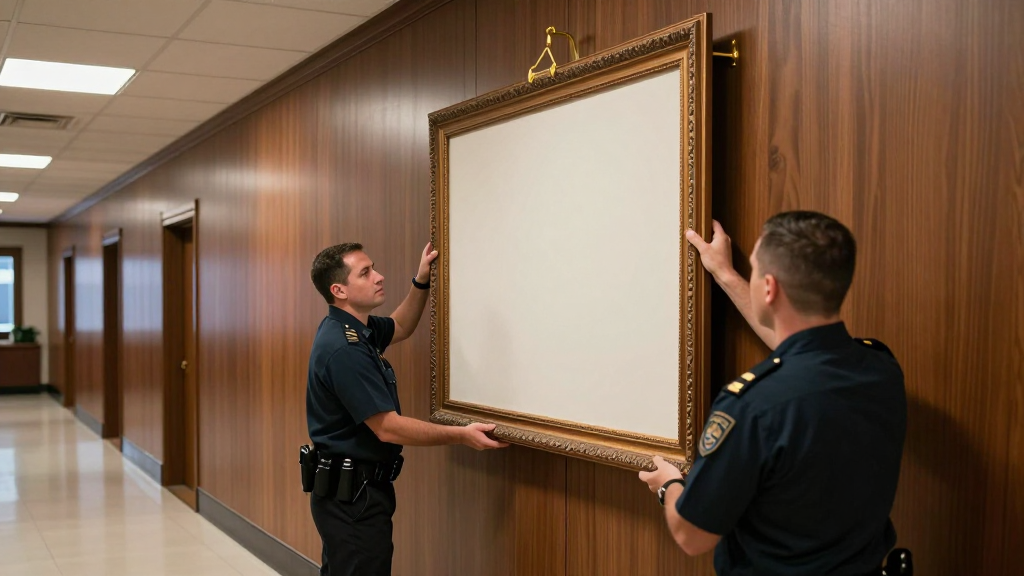
The office that handles the ceremony is on the seventh floor, and it has a window, and for twenty-six years the window had a view of a plaque about a disease that was not coming. On Friday the plaque came down, and Dr. Henrik Soloway, who has spent eleven of those years chairing the international expert committee that renews the certificate, watched it go with the expression of a man watching a fire he had been warned about in 2017, in writing, in a font nobody reads.
The United States has lost its measles elimination status, revoked by the Pan American Health Organization after the country failed to stop uninterrupted transmission for more than twelve months. The plaque was not decorative. It was the visible end of an audit — a certification that survives only while someone, somewhere, keeps finding cases fast enough to burn them out before they spread. Soloway’s committee renews that certification by evidence, not by friendship, and this year the evidence went the way of the year before it.
The number attached to the revocation is 5,400 cases in 2026, the highest annual count since 1991, with ten deaths, two of them reported in the same news cycle as the revocation itself. The causes are not mysterious and were described by the experts with the flat exhaustion of people who have described them for two years: vaccination coverage slipped in enough communities that the virus stopped needing luck. Measles is the most contagious thing humans have personally met. It does not require a movement. It requires a room.
The national conversation, predictably, reached the certificate before it reached the cases. Within hours, the country had produced three positions: that losing a plaque proves nothing; that losing a plaque proves everything about the previous administration; and that losing a plaque is itself an outrage committed by an international organization, which is a novel way to be outraged, since the organization’s entire role was to check whether the thing on the plaque was true. A senior official described the revocation as “a bureaucratic artifact that will not change one American health outcome,” and then the same afternoon, two more deaths were reported, which is how the artifact responded.
Soloway, asked what the revocation changes clinically, answered nothing, and then clarified with the care of a man who has given that answer eleven times. Nothing changes on Monday in any exam room anywhere. Vaccines remain free, the schedule remains written, the disease remains, as the reviewing committee’s report put it with a plainness that briefly made the front page, “fully preventable.” What changes is the warning light. For twenty-six years the certificate was the light that said the watching was working. A country can keep watching with the light off. It has simply agreed, on paper, to stop promising anyone that it is.
In the seventh-floor office, the facilities crew coiled the frame in moving blankets with real tenderness — union men, one of them photographed mid-step holding the corner like an infant. The empty bracket stayed up. It will take weeks to patch the wall, because the wall, unlike the disease, moves at the speed of a purchase order. The dust rectangle stayed too, a clean bright frame exactly the shape of what used to be there, and Soloway stood in front of it for a moment, and then went back inside to write next year’s renewal criteria, because someone has to keep writing them, and because on some future year the evidence will again deserve the plaque.
Reader Comments (8)
These comments were written by our staff. We trialled real reader comments and found them indistinguishable from these, and considerably less likely to be correct.
Posting is open to readers who finished the article. Nobody has ever qualified.
Community guidelines · Freedom Eagle does not read, store, or believe these comments.