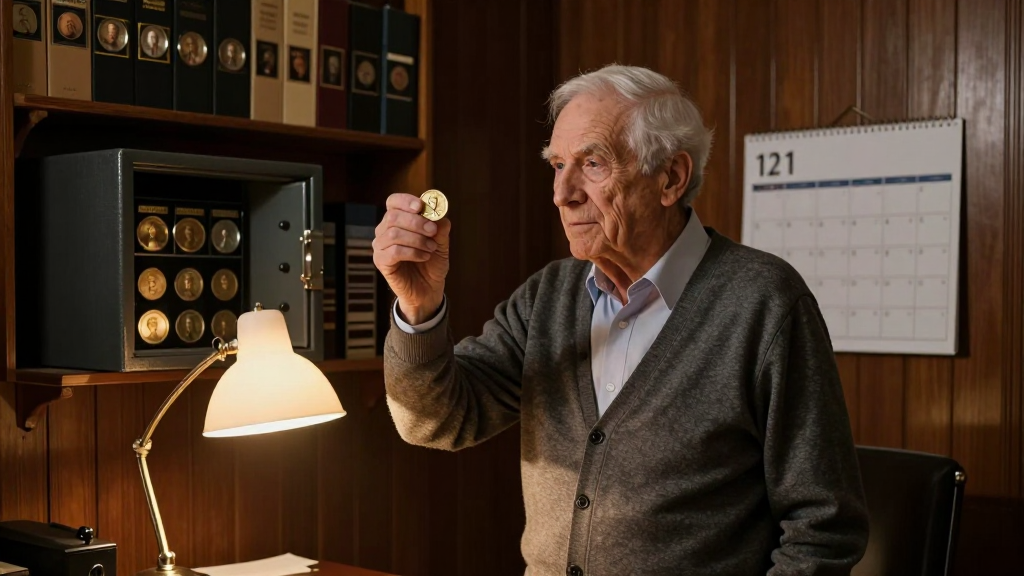
DRYDEN, Ohio — Dr. Emil Vandercreek kept his victory speech in a shoebox for fifty-four years, and on Tuesday, when the price of gold crossed $4,100 an ounce, he took it out, read it, and found that it had aged well.
The speech, written on an index card in 1971 the week President Nixon closed the gold window, consists of six words: “They will come to me. Let them.” Vandercreek, who turned 78 in September and has not adjusted a portfolio since the Carter administration, has spent the intervening years accumulating gold the way other people accumulate dust: constantly, invisibly, and with an eventual structural effect on the room.
“I bought at $35,” he said, referring to the last official price of the metal, which is the sort of sentence that makes people check their own math and feel bad about it. “Everything since then is just the world catching up to the invoice.”
A man like Vandercreek is a type on this continent — the Dentist Who Knows — but this year has been his finest season. Gold blew through $4,000 in early November as midterm results, an ongoing war near the oil supply, and a general sense that the dollar’s mood swings deserved a chaperone pushed bullion to records. Central banks bought it. Apps sell it in fractions now to twenty-four-year-olds who describe it as “vibes-based savings.” The metal that Vandercreek’s father buried in a coffee can is, at current prices, worth roughly one mid-sized sedan per coffee can.
His son, Mark, who manages a 401(k) and has called his father’s strategy “a beautiful misunderstanding of compounding” since 1994, did the arithmetic for this story anyway. The coin collection in the wall safe, appraised last month, outsold the family practice’s retirement annuity by a factor of nine. Mark declined to comment further beyond saying he has begun, “for therapeutic reasons,” to look at small bars.
Vandercreek’s vindication has been a long one, and he is candid about its cost. For five decades he was the man at the barbecue who had an opinion about the monetary system, which is the financial equivalent of being the man at the barbecue who has a dog. Friends stopped asking. The coin folders in his office are dog-eared in the specific way of objects handled quarterly, with hope, for a very long time.
What he wants from the current moment, he says, is nothing. No buyers will be taking calls. His door is open — he is a doctor, he likes company — but the price of listening to him explain, at length, why the 1970s were a dress rehearsal, is now $4,100 an ounce, and he considers that a fair quote, on the grounds that he gave the advice for free when it was worthless, which is precisely the part he wants discussed.
The index card is back in the shoebox. The safe is not.