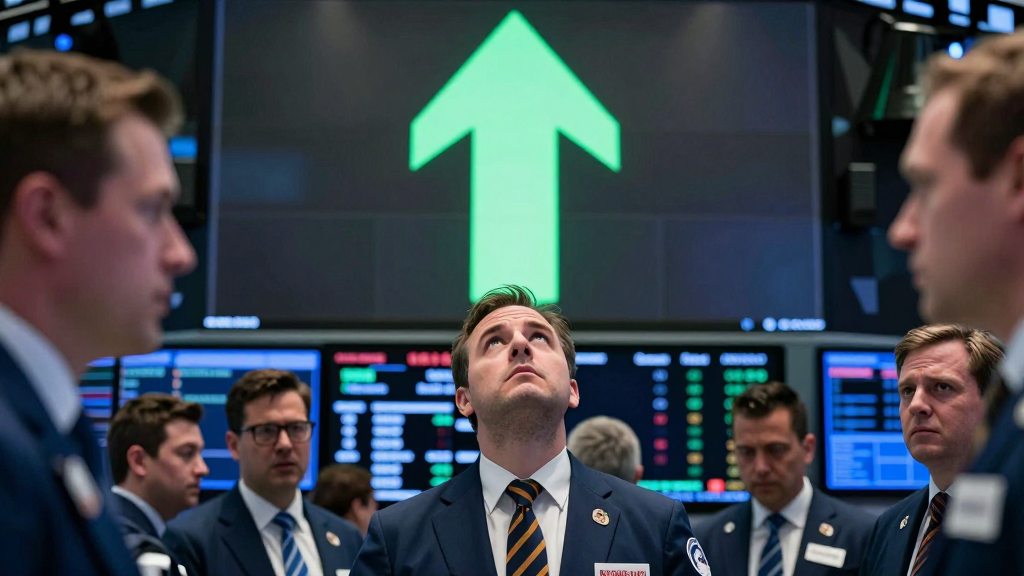
The number was 165,000. Americans went out and got jobs in October — the strongest hiring in months, about triple what Wall Street expected, with unemployment sliding to 4.1%. The reaction across the country, from sofa to Senate, was concern.
“We are living inside a miracle and treating it like a weather warning,” said Bernard Osterhout, chief economist at a research firm he declined to name, because he has spent the morning on the phone and would rather be on the next one. He spoke for eleven minutes without interruption. This transcript is a fraction.
“First: 165,000 jobs. Beautiful. Second: the bond market read it in ninety seconds and decided that a strong labor market means the Fed may not cut rates — it might, at the margins, lean the other way, because an economy that hires this hard hires inflation in too. Third: nobody in the room wants to be the person who says ‘good news’ out loud. So the yields rose, the rate-hike odds rose, and everyone pretended to be upset. It was extremely American.”
The jobs report landed Friday morning, two days after 60 million people delivered the most decisive midterm verdict in decades, which gives Washington a rare situation: an economy performing to the left of its critics and a capital performing to the right of its own mood. NBC noted the bright spot in a headline that also contained the word “stagnation,” a pairing that tells you where the newsroom’s heart is: the facts are fine, the vibes are terminal.
The odd part is that both halves are true. A household looking at a paycheck it finally got, and a mortgage rate that might now wait, is looking at an economy that worked and charging it for working. Osterhout has a phrase for this, which he used twice.
“The celebration tax,” he said. “Every good number arrives with a bill attached: the rate. The 165,000 jobs are the good part. The 165,000 jobs are also the reason the good part gets taxed. It’s not a contradiction, it’s the whole machine.”
By 9:15 a.m. Friday, bond traders had decided the miracle was suspicious. By 10 a.m., stock traders had decided to like it the way people like food at a funeral — quietly, and with their heads down. Memory-chip stocks, hammered globally this week over the price of computing, bounced anyway.
In October, 165,000 Americans did the thing they are told the economy no longer lets them do. The economy, in return, may raise the price of borrowing money to punish them for doing it so well.
165,000. Read it again. Nobody has.