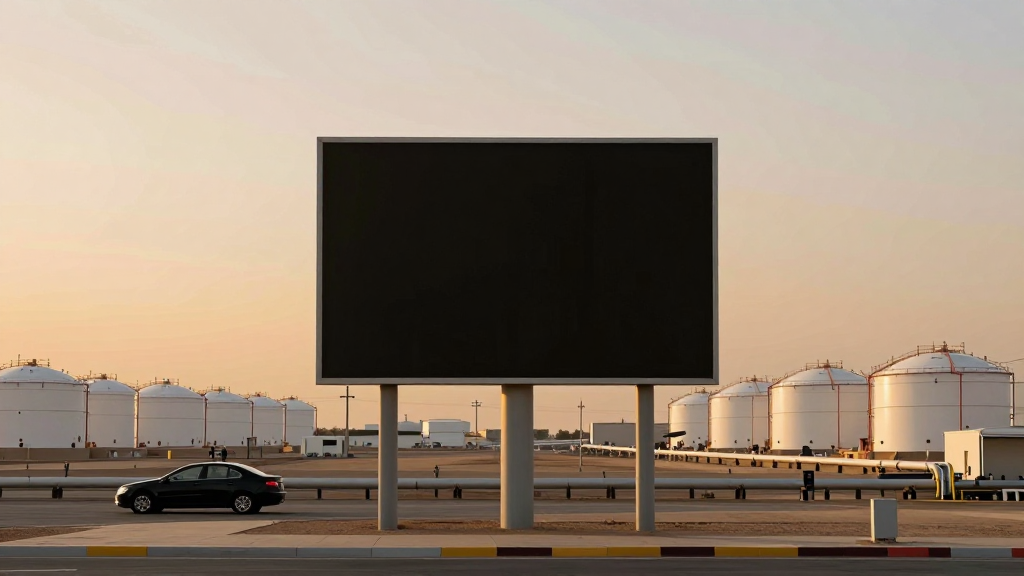
DHAHRAN, SAUDI ARABIA — Crude is on sale, and the free market, at long last, has become somebody else’s problem to be grateful about.
Let us be honest about what happened. Last Tuesday the American people went to the polls furious at the pump, and the almighty, all-knowing electorate expressed itself. A week later, the kingdom of Saudi Arabia cut its benchmark price to Asia so deep that analysts had to check their eyeglasses. Saudi Aramco knocked its December selling price for Arab Light down another $2 a barrel, to a $6.50 discount against the regional average, the widest gash since the depths of the pandemic spring of 2020. November had already been a $5 discount, the loosest margin since June of that same forgotten year.
Now, the timing. I am not going to stand here and insult your intelligence by pretending a monarchy noticed when a democracy got angry and chose, as if guided by some higher accounting, to respond within the week. That would be childish. But I will note it, warmly, and I will suggest we all stop thinking about it together.
THE ANALYSIS
“These are not price cuts,” said Dana Whitlock, an energy analyst at a firm whose name no one has ever repeated, holding her hands apart like a man describing a parking space. “These are falling prices with excellent posture. A discount is a discount, but the $6.50 is a discount that has been to a tailor. America screamed, and Arabia reached for the coupons. You tell me if that is a coincidence. The markets are not sentimental, but they are, on occasion, listeners.”
The analysis is easy to admire. With supply recovering worldwide, analysts read this as a market-share land grab, which is exactly the sort of grab that ought to make an American’s heart swell, because grabbing market share is the most American thing a person can do, and here a monarchy is doing it on our behalf. Meanwhile, Aramco actually raised its prices for northwest Europe and the Mediterranean and left the United States untouched — a regional triage so flattering to the American consumer that it reads as a tribute. Freight costs tied to tankers through the Strait of Hormuz hit a record, and still America got the gentle treatment.
THE PEOPLE
In Paramus, New Jersey, a gas-station owner named Lenny Caldera said he had already printed new signs. “Fifteen cents cheaper and I updated the board before the shift change,” he said. “A sign that says less is the most patriotic billboard I have ever hung. I hung it with a hammer and a sense of duty.”
Ed Vasquez, a former campaign strategist who has not taken a call since Tuesday, was careful to be clear. “The timing means nothing, and we should all stop thinking about it,” he said, choosing his words with the care of a man on a witness stand. “One party lost because of gas, and the other party got a week of discounts. There is no causal pathway. Do not draw one. I am telling you, as a professional, nothing happened here.”
For its part, Aramco was candid. “We looked at the American soul, and we priced accordingly,” said a company spokesman, who asked to remain an employee. “When a customer is this upset, you do not raise their rates. You fold in the savings. That is customer service, and it is also, in certain quarters, being described as statesmanship.”
I propose, for the record, that America finally thank the kingdom publicly — a parade float built entirely of discount barrels, maybe, pulled past a crowd of people who were told, last week, that the gas prices were permanent. It is the least we can do, and the least we will probably do.
The November price list now hangs in the Dhahran lobby, near the badge check, in a font optimistically small.